In Murrieta, heating systems don’t run year-round, but when temperatures drop, homeowners expect them to start as usual. Long idle periods often mask minor mechanical and electrical issues that only surface when the system is turned on again.
These issues rarely cause dramatic system failure. More often, they appear as error codes, short cycling, or complete refusal to start. That’s what makes routine maintenance less about upkeep and more about catching what hasn’t broken yet.

Flat-rate, Upfront Pricing

Fully Licensed & Insured

100% Satisfaction Guaranteed
A Furnace That Still Ran, But Raised Real Concerns
Juan Leyva scheduled a $49 furnace tune-up with Airtime Plumbing Heating and Air.
His system was installed in 2005. It still produced heat, but he no longer trusted it blindly.
Juan was concerned about the system’s age and whether it would last through the winter. He wanted to get the most from his 20-year-old unit.
It wasn’t an emergency call but a check before something went wrong.
Our technician, Pedro Espinoza Jr., arrived expecting a standard tune-up.
In most homes, that means a predictable process:
- Verify thermostat operation.
- Inspect electrical connections.
- Check burners and ignition.
- Test airflow and safety switches.
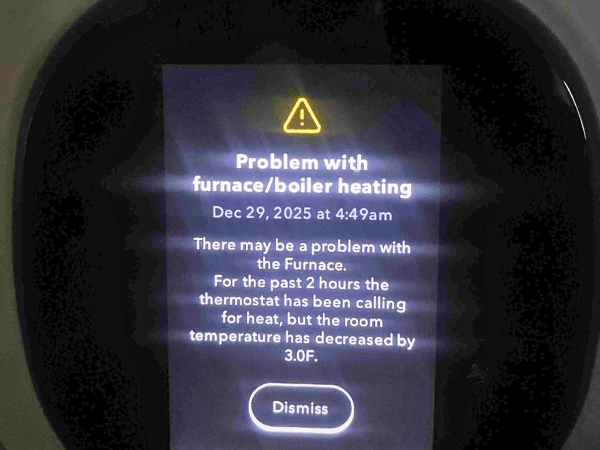
Before the inspection fully started, something stood out.
The thermostat was already flashing an error code.
That immediately shifted the job from maintenance to diagnosis. Something in the system was already triggering a safety shutdown.
Diagnosis: A Safety Lockout, Not a Random Failure
The error code pointed towards the pressure switch circuit.
For context, the pressure switch is a safety device in all gas furnaces sold in California. It detects proper exhaust gas venting before ignition. If airflow is obstructed or unstable, the furnace shuts down to prevent unsafe operation.
Pedro began a structured diagnostic process, where he:

- Pulled and interpreted the control board error history.
- Checked low-voltage electrical circuits and fuse protection.
- Inspected the inducer motor and pressure switch tubing.
What he found was not a single failure point, it was a combination issue:
- A blown low-voltage fuse interrupts control power.
- A partial blockage in the pressure switch tubing disrupted airflow detection.
These combined issues triggered a safety lockout. The furnace wasn’t failing at a single point but protecting itself from unsafe conditions.
In California, gas furnace safety systems are part of the manufacturer’s certification to the CEC and must comply with ANSI appliance safety standards that require the furnace to shut off if they detect a dangerous level of CO within the equipment.
This means that if this system cannot confirm proper venting, the furnace cannot ignite.
The Repair: What Had to Be Done to Restore Safe Operation
This issue requires restoring electrical integrity and confirming safety systems are operational before resuming use. A simple reset will not fix it.
Electrical Correction and Control Stability

Pedro began with the electrical fault, so he:
- Replaced the blown fuse on the control board with a manufacturer-rated equivalent.
- Verified transformer output and low-voltage continuity.
- Checked for loose or heat-damaged wiring connections.
Correcting low-voltage faults is essential because HVAC systems in California may experience cascading safety shutdowns if these faults remain unresolved.
Pressure Switch Line Restoration
Then he fixed the airflow safety system by:
- Removing the pressure switch tubing connected to the inducer housing.
- Clearing internal blockage caused by dust and condensation buildup.
- Reinstalling tubing, ensuring an airtight seal, and correcting routing.
- Verifying pressure switch operation during startup sequence.
Verification Under Real Operating Conditions
Before completing the job, Pedro ran a full system cycle, where he:
- Confirmed proper ignition sequence.
- Verified stable flame operation.
- Checked the inducer motor pressure consistency.
- Ensured no error codes reappeared
This step matters because HVAC professionals must verify operational safety under load, not just “power-on condition.”
The Outcome: A System Restored Before Failure
The full process took about two hours.
After the repair:
- The furnace started normally, with no error codes.
- Heating output returned to consistent operation.
- Safety systems functioned exactly as designed.
What looked like a minor tune-up visit actually prevented a likely no-heat situation later in the season.
Instead of waiting for a cold-night breakdown, problems were detected and resolved during inspection, highlighting why proactive tune-ups matter.
Why This Matters in Murrieta Homes

In homes across Riverside County, especially older properties in inland areas like Murrieta, furnace failures often follow a pattern:
- Systems sit unused for long periods.
- Small electrical faults develop unnoticed.
- Safety systems become more sensitive with age.
- The first cold night exposes everything at once.
Routine inspections and tune-ups are essential for HVAC efficiency and safety. Airtime Plumbing Heating and Air’s trained technicians focus on thorough diagnosis to catch issues early and prevent costly repairs.
As Juan shared in his Google review: “Pedro came by and did an outstanding job on my furnace today.”
His experience reflected what mattered most: the system was checked properly, the issue found, and heat restored before it became a problem.
Book a Tune-Up Before Small Issues Get Worse
At Airtime Plumbing Heating and Air, service isn’t just about fixing equipment. It’s about showing up prepared, identifying the real issue, and ensuring the system is actually safe and reliable before leaving the home.
We have over 26 years of experience delivering full-scale HVAC services in Murrieta, including routine tune-ups, same-day emergency repairs, and energy-efficient replacement.
Call us today or schedule service online to prevent expensive repairs and ensure comfort and safety when needed most.
FAQs
Why would a furnace show an error code if it still worked before?
Because some problems only appear during a full startup cycle. A tune-up often triggers those conditions.
What does a pressure switch actually do?
It ensures the furnace is safely venting gases before allowing ignition. If the airflow isn’t correct, the system shuts down.
Can a blown fuse stop the whole furnace from working?
Yes. A fuse protects the system’s electrical components. If it fails, parts of the furnace may lose power and stop functioning.
Is it normal for older furnaces to have multiple small issues at once?
Yes. As systems age, small electrical and mechanical issues often appear together rather than as a single failure.
Can a tune-up really prevent a breakdown?
In many cases, yes. Tune-ups help identify early warning signs before they turn into full system failures.
Airtime Services Included

HVAC Services
Plumbing Services
- Water heater installation
- Water heater repair
- Water heater replacement
- Tankless water heater installation
- Tankless water heater repair
- Tankless water heater replacement
- Leak repair
- Slab leak repair
- Repiping services
- Mainline services
- Leak detection